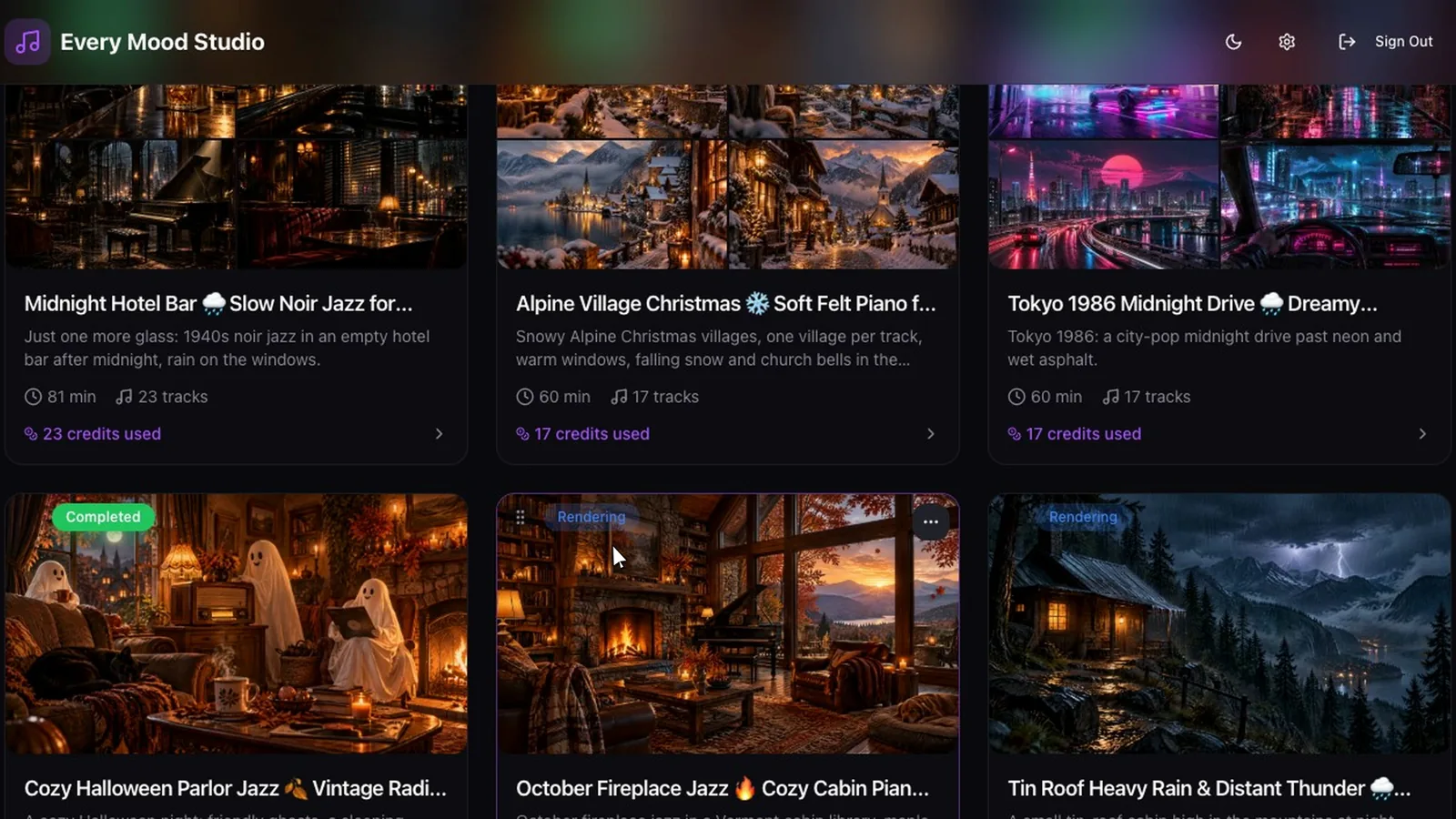
I build my products with two AI tools, Lovable and Claude Code, and I use them for different jobs. Lovable is where a product starts, gets its screens and its database, and goes live. Claude Code works deeper in the same code, through GitHub, on the parts that need care: payments, security, tests and fixes. My two products with paying customers, Every Mood Studio and CIPLE Ready, were built with both.
A note before you read: I hold the Lovable Expert 2026 partner badge. Lovable's partner program pays experts a 10% commission on Business plans they bring in. There are no referral links in this post, and every price below links to the vendor's own page.
Which one should you use?
The short answer depends on where you are. This is how I decide, from my own projects with Lovable and Claude Code:
| If you | Start with | Why |
|---|---|---|
| Have an idea and no code yet | Lovable | You see working screens the same day, with a database and hosting included |
| Take payments or keep personal data | Lovable, then Claude Code | I want a second AI to read the whole codebase for webhooks, security checks and tests |
| Need work outside an app | Claude Code | It works with any files: data, scripts, documents, even video |
| Already have a Lovable app with a bug | Lovable first, Claude Code if the bug spans many files | Claude Code reads the code from GitHub and works in a branch |
I started with Lovable in December 2025 and added Claude soon after. By 25 November 2026 my Lovable workspace held 67 projects, many of them experiments, and 25 of them published.
The one difference that matters
Lovable is an app builder you talk to in the browser, with a live preview, a database and hosting in one place. Claude Code is an AI agent that works inside a codebase: in Anthropic's words, it "reads your codebase, edits files, runs commands, and integrates with your development tools". One builds the app in front of you, the other works on any code you give it.
That difference decides everything else. In Lovable I see the screen change as I describe it. In Claude Code I describe the job, it works across many files, and the result is checked in a preview or a test.
What Lovable does in my work
Lovable is where every product of mine starts. I describe the product, it builds the screens, and its database, sign-in, storage and server functions come from Lovable Cloud. When the product is ready, it is published from Lovable to my own domain.
Concretely, Lovable gives me:
- Screens fast: a first version I can click through and change by talking
- Lovable Cloud: a database, storage, sign-in, realtime updates and server functions, with hosting included
- Publishing: one click to put the product live on my domain
- GitHub sync: two-way sync with a GitHub repository, so the code is mine and other tools can work on it
The sites I build for myself are made the same way. This site, yanayart.com, is a Lovable project, and so is my photography website.
What Claude Code does in my work
Claude Code does the work that needs the whole codebase in view. It reads the code from GitHub, makes changes in a separate branch and opens a pull request, which is built, tested and checked in a preview before it is merged. Anything that touches payments waits for my yes. Then Lovable picks up the change and it is published.
The jobs I give Claude Code:
- Payments: Stripe checkout, webhooks and credit systems, where one wrong line costs real money
- Security audits: reading every server function and database rule of an app for holes
- Tests: checks that run every day and tell me when a key flow breaks
- Fixes: a bug a customer reports, traced through several files
- Work outside apps: moving my 9 TB photo archive, a bridge between a colour grading panel and Lightroom, editing reels and travel vlogs
When Claude Code audited one of my live apps in October 2026, it found server functions anyone could call and limits that were missing, and the fixes went live.
What went wrong, and what I changed
Most of what went wrong was about how I worked with the tools, not a flaw in either one. These are four real cases from my products, from July to November 2026.
An AI-written webhook that charged and gave nothing
In July 2026, a one-time purchase in one of my products went through and granted nothing. The generated webhook had two identical case labels for the same Stripe event, and JavaScript only ever runs the first one. The fix was one case with a branch inside it, and the rule I keep: a person reads every generated payment webhook.
A merged change that was not published yet
Early on I merged a change on GitHub and it did not appear on the live site. Lovable syncs the code, but a Lovable app goes live only when it is published, which is how Lovable is meant to work. Now publishing and checking the live page are part of every change.
Test emails that hit my workspace's limit
In October 2026, test runs for Heirloom Folio sent 111 real emails in one go and ran into the hourly email limit that my Lovable workspace shares across all its projects. The mistake was in my tests, and the fix stopped them from sending real emails.
Usage limits on long Claude Code days
Claude Code works within the usage limits of the Claude plan. Once, 14 Claude Code sessions and their helper agents, running side by side, used about 85% of my weekly allowance for one model. Now every parallel session stops at a usage limit.
What each one costs
Both bill monthly or yearly, and both have a free tier. The prices below are from each vendor's own pages, checked in November 2026, and they change often, so check the links before you decide.
| Lovable | Claude | |
|---|---|---|
| Free | 5 credits a day, up to 30 a month | Free plan, without Claude Code |
| First paid plan | Pro from $25 a month, 100 credits | Pro, $20 a month, or $17 a month billed yearly |
| Larger plans | Pro and Business in credit tiers up to 10,000 credits a month (Pro up to $2,250), Business from $50, plus Enterprise | Max $100 a month, Ultra $200 a month |
| What you pay for | Credits for building, and for database and AI use in Lovable Cloud | Usage limits that come with the plan |
| Source | Lovable plans (opens in a new tab) | Claude pricing (opens in a new tab) |
On Lovable, monthly credits on paid plans carry over for a limited time, while the free daily credits do not. Hosting on Lovable is included, and database, backend and AI use inside Lovable Cloud come out of the same credit balance. Claude Code comes with the paid Claude plans, Pro and up.
How I use the two together
My workflow, the same for every product:
- 1I create the project in Lovable and build the first screens and the data model by describing them
- 2Lovable syncs the code to a GitHub repository
- 3For deeper work, Claude Code works in a new branch and opens a pull request
- 4The change is tested in a preview and merged. Anything that touches payments waits for my yes
- 5Lovable picks up the merged code, and the project is published
- 6Changes to the database structure go through Lovable, which manages them
Claude Code can also talk to Lovable directly: Lovable's MCP server (opens in a new tab) lets Claude Code ask Lovable for a change or publish a project (checked November 2026). Lovable edits one branch at a time, by default the repository's main branch, so all other work happens in branches until it is merged.
Questions people ask me
Is Lovable good for a non-technical founder?
It was my start. I never took a coding course, and my first products went live from Lovable. What a non-technical founder still needs is a clear picture of the product and the patience to test every flow yourself, as I do on every product.
Can Claude Code work on a Lovable project?
Yes. Connect the Lovable project to GitHub, open the repository in Claude Code and work in a branch. When the pull request is merged into the branch Lovable syncs, the change appears in Lovable, ready to publish.
Do I need to know Git to use Claude Code?
You need to understand what a branch and a pull request are. Claude Code runs the commands itself, and it explains what it did. I learned this by building, not from a course.
Is an app built with Lovable secure?
Not automatically, and neither is any other app. Any app that takes payments or stores personal data needs its server functions, database rules and payment webhooks checked before launch. When I audited one of my live apps with Claude Code in October 2026, it found real problems, and the fixes went live.
Choosing for your own business
If you are choosing between these tools for your business, tell me what you want to build, what already exists and who it is for, in a short brief. You can see how I work, and the products I built this way on the founder page.
Published 27 November 2026. Plans and prices checked in November 2026 on Lovable's plans page (opens in a new tab) and claude.com/pricing (opens in a new tab). Claude Code description from Anthropic's Claude Code documentation (opens in a new tab). Lovable Cloud and GitHub sync from the Lovable Cloud (opens in a new tab) and GitHub (opens in a new tab) documentation, and partner terms from lovable.dev (opens in a new tab), all checked November 2026.